
Why do some ecommerce stores convert several times better than others? Often it comes down to one underrated surface: the search bar. Amazon, the company that effectively wrote the rulebook for online retail, has built its entire shopping experience around it.
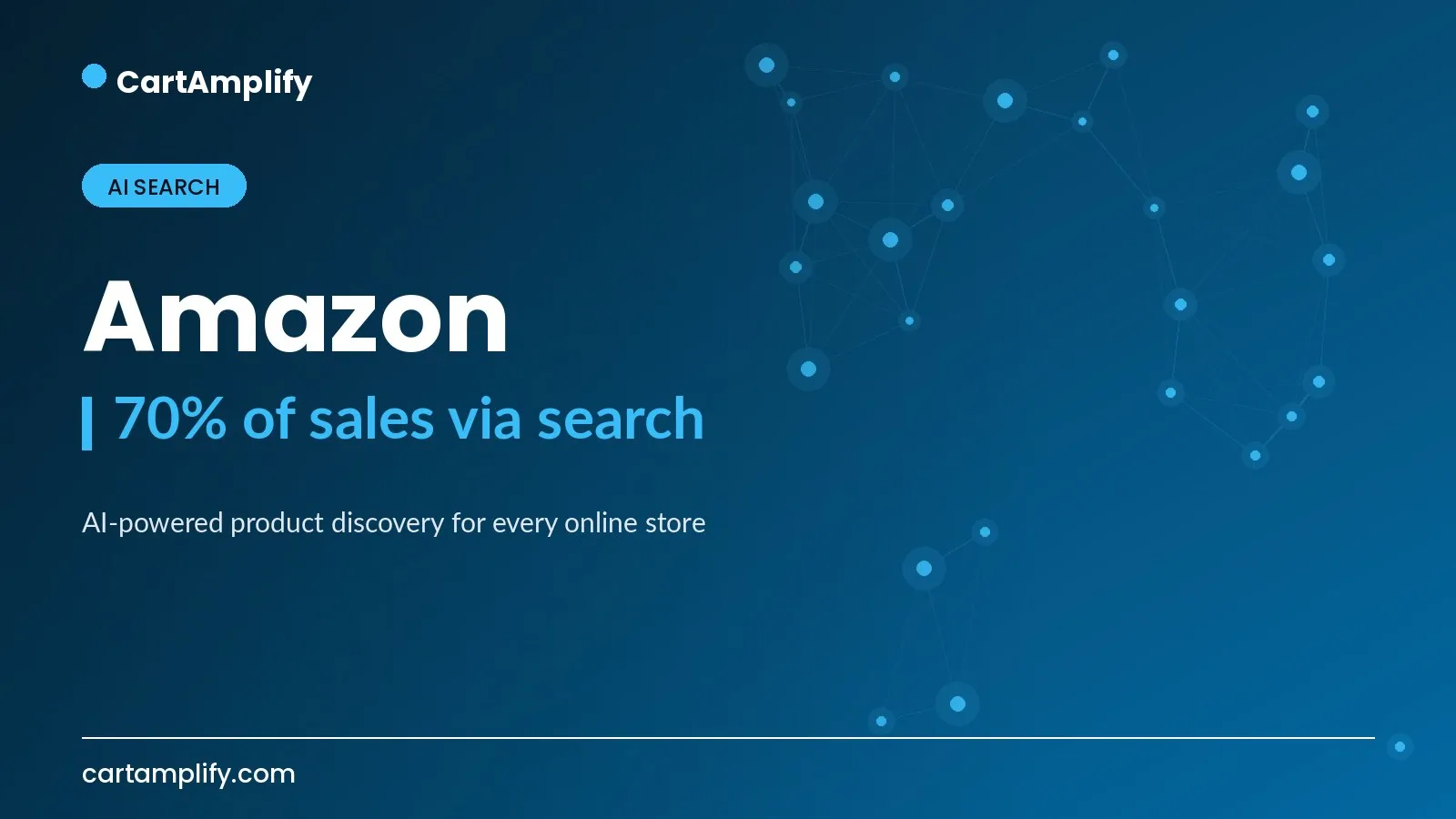
The pattern: Amazon’s AI-powered search processes billions of queries daily, and search-initiated journeys are widely estimated to account for a large majority — on the order of 70% — of where its purchases begin.
The search bar is the store#
On Amazon, most shoppers don’t browse categories — they type. The search box is the front door, the aisle, and the shelf all at once. That’s why Amazon invests so heavily in search relevancy: the company reportedly maintains hundreds of engineers dedicated to it, because a fraction of a percent improvement in search ranking translates into enormous revenue at its scale.
The data backs up the instinct. Visitors who run a search convert at dramatically higher rates than those who only browse — searchers have declared intent, and intent is the rawest form of buying signal there is. When most of your purchases begin with a query, search isn’t a feature. It’s the business.
How AI search turns queries into sales#
Amazon’s search is not a keyword index — it’s a ranking system trained to predict purchases. Type a query and the engine weighs relevance, price, availability, reviews, and your own history to order results by what you’re most likely to actually buy. It tolerates typos, understands synonyms and natural language, and learns continuously from what shoppers click and purchase.
Three capabilities make this work:
Semantic understanding means the query “wireless earbuds for running” returns sweat-resistant, secure-fit options — not just any product with those words in the title. Behavioral ranking orders the results so the highest-probability purchase sits where the eye lands first. And continuous learning means every search across millions of shoppers makes the next search sharper.
The combined effect is that Amazon rarely lets a high-intent shopper hit a dead end. The query almost always resolves into a buyable, relevant, well-ranked set of products — which is precisely why so many purchases trace back to that first search.
Why this matters more than it looks#
It’s tempting to assume Amazon’s search dominance is a function of catalog size or brand habit. But the deeper lesson is about where you invest. Amazon concentrates effort on the moment of highest intent — the search — because that’s where small improvements pay the largest dividends. A shopper browsing might convert; a shopper searching is telling you they’re ready. Failing them at that moment is the costliest mistake in retail.
Most stores get this backwards. They pour budget into acquisition to drive traffic, then route that hard-won traffic into a keyword search that breaks on a typo or returns nothing for a natural-language query. The leak isn’t at the top of the funnel — it’s at the search box.
What this means for your store#
You will never match Amazon’s catalog. You can absolutely match its priorities:
- Treat search as your highest-intent surface and invest there first.
- Use semantic AI search so real human queries — typos, synonyms, descriptions — still convert.
- Rank results by purchase likelihood, not just keyword match, so the best option leads.
The store that answers intent fastest wins the sale. On Amazon, that’s the search bar. On your store, it can be too.
Bring AI search to your store with CartAmplify#
CartAmplify brings Amazon-grade AI search to any store — Shopify, dropshipping, or marketplace. Semantic search that understands what shoppers mean and ranks results by what they’ll actually buy, turning your highest-intent traffic into revenue.
Related reading#
- How Amazon’s AI Updates Prices 2.5 Million Times a Day
- How Wildberries Grew Turnover 60% with AI Search
The ~70% figure is a widely cited industry estimate for the share of Amazon purchase journeys that begin with search; Amazon does not publish an official figure. Results vary by store, catalog, and implementation.