
Why is browsing data one of the most valuable signals a retailer has? Because what shoppers look at predicts what they’ll buy — and what to make. Zara turned that insight into its legendary speed, using AI to read browsing patterns and respond in weeks, not seasons.
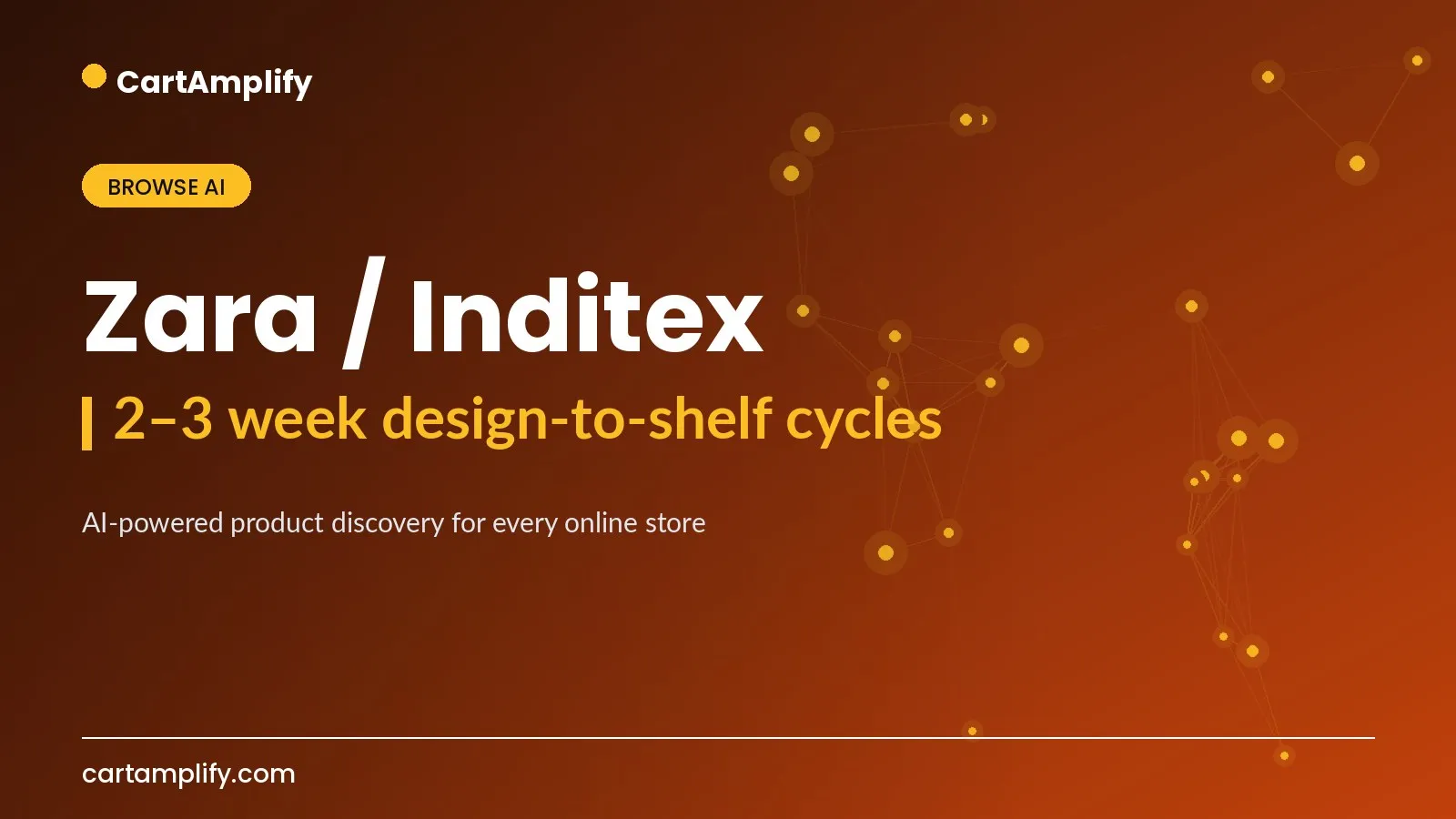
The result: Zara’s AI analyzes browsing patterns online and in-store to predict demand, enabling 2–3 week design-to-shelf cycles and reducing unsold inventory.
Browsing is a demand signal, not just a discovery problem#
Most retailers think of browsing behavior only in terms of personalizing the storefront. Zara goes further: it treats aggregate browsing data — what shoppers view, linger on, and try — as a forecast of demand. That signal feeds its famously fast supply chain, letting Zara design, produce, and ship new products in 2–3 weeks while competitors work on seasonal cycles. The same data that personalizes the browse experience also tells Zara what to make next.
The payoff is twofold: shoppers see fresh, in-demand products faster, and Zara reduces unsold inventory by making more of what browsing data shows people actually want.
How browse AI works#
Browse AI personalizes the exploration experience — but the behavioral data it collects is also a powerful demand signal. Reading browsing patterns serves discovery and informs what to stock and make.
Three mechanics matter. The engine personalizes discovery, surfacing relevant products as shoppers browse. It aggregates demand signals, reading what shoppers collectively view and engage with to predict trends. And it informs supply, feeding those signals into decisions about what to produce and stock.
Why browsing data closes the loop#
The elegance of Zara’s approach is that browse AI closes the loop between demand and supply. Browsing reveals interest before purchase; capturing that signal lets the business respond — making more of what’s trending, less of what isn’t. That reduces the two costs that plague fashion: stockouts of popular items and markdowns on unsold ones. The browse experience isn’t just where shoppers discover products; it’s where the business discovers what to sell.
What this means for your store#
Even without Zara’s supply chain, your browsing data is a forecast you’re probably not using:
- Personalize the browse experience while also capturing aggregate demand signals.
- Read what shoppers view and engage with to anticipate trends, not just past sales.
- Feed those signals into stocking and merchandising decisions to reduce overstock and stockouts.
Browsing reveals demand before it becomes a purchase. The stores that read it sell more of the right things.
Bring browse AI to your store with CartAmplify#
CartAmplify brings browse AI that personalizes discovery and surfaces demand signals to any store — Shopify, dropshipping, or marketplace. Understand what shoppers want before they buy it.
Related reading#
- How Zara Lifted Completed Purchases 30% with AI
- How Zara’s AI Trend Analysis Helped Drive 7.1% Sales Growth
- How Decathlon Lifted AOV 40% with Browse AI
Approach cited from publicly reported Zara/Inditex practices. Results vary by catalog, traffic, and implementation.