
Why does Zara’s parent company treat trend analysis as a data problem at massive scale? Because knowing what shoppers will want next — and adjusting the offering in real time — is the core of its model. AI lets Zara read demand from millions of data points and respond fast, contributing to solid growth.
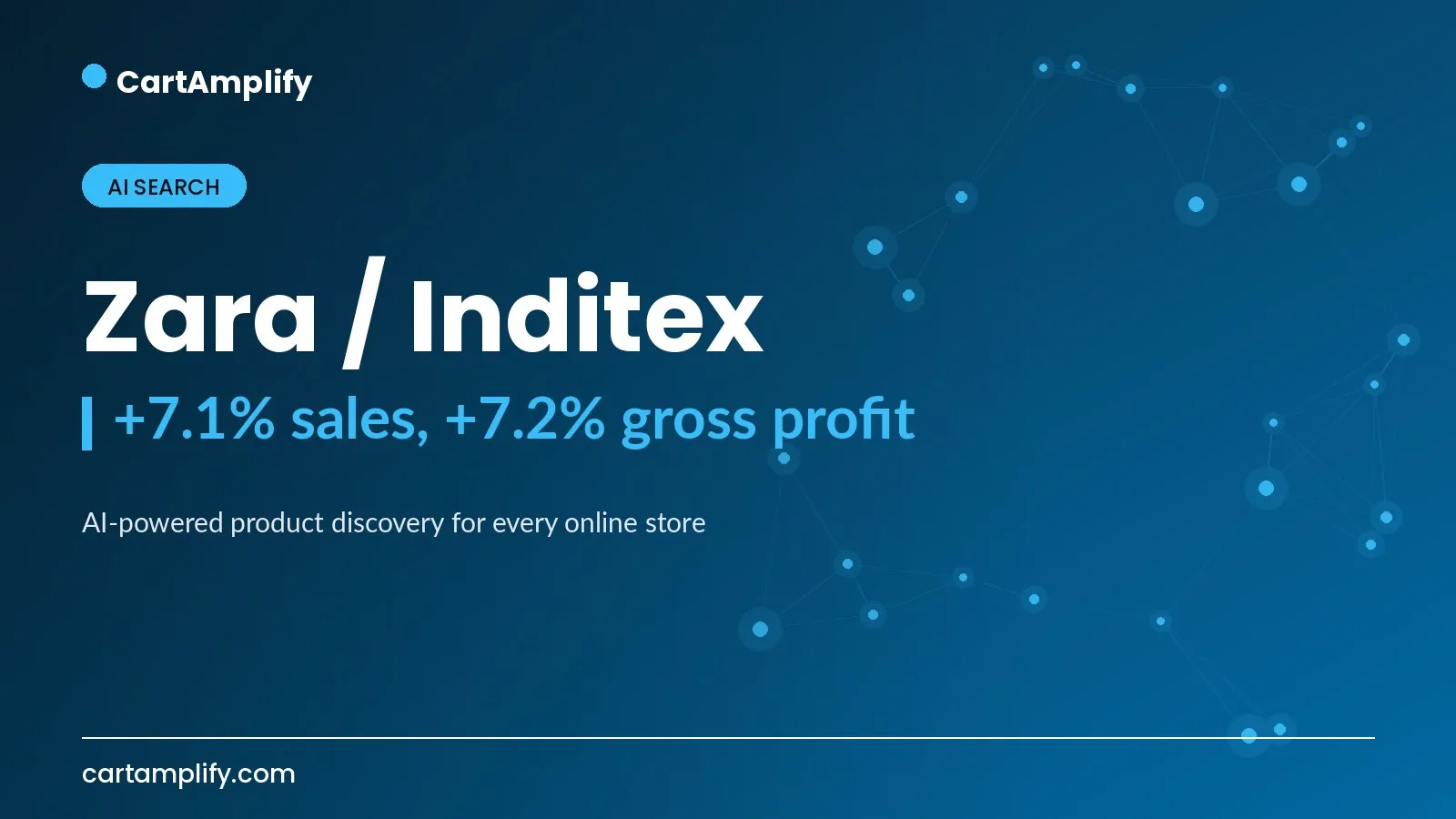
The result: Zara’s AI-powered trend analysis scans millions of online data points to adjust product offerings in real time, contributing to 7.1% sales growth and 7.2% gross profit growth (Inditex, nine months FY2024).
Reading demand at the speed of data#
Zara’s legendary responsiveness depends on knowing what’s resonating now. AI makes that possible at scale: by scanning millions of data points — searches, browsing behavior, engagement signals — it detects what shoppers are gravitating toward and feeds that insight into real-time decisions about what to offer and emphasize. The payoff shows in the financials: 7.1% sales growth and 7.2% gross profit growth, the latter reflecting that selling more of what’s actually in demand reduces markdowns and protects margin.
How AI-driven discovery and trend analysis work#
The same AI that personalizes a shopper’s search and discovery also aggregates signals into demand intelligence. Discovery serves the individual; trend analysis serves the business — and they run on the same behavioral data.
Three mechanics drive Zara’s result. The engine reads demand signals at scale, detecting trends from millions of data points. It adjusts offerings in real time, surfacing and emphasizing what’s resonating now. And it protects margin, because aligning the offer with real demand means fewer unsold items and markdowns — which is why gross profit grew alongside sales.
Why margin growth matters as much as sales#
The instructive detail is that gross profit grew faster than sales (7.2% vs 7.1%). That’s the signature of demand intelligence done well: you’re not just selling more, you’re selling more of the right things, so you discount less and waste less inventory. AI that reads demand helps a retailer make and surface what shoppers actually want, which lifts the top line and protects the margin simultaneously. For fashion, where markdowns are a constant drag, that’s a powerful combination.
What this means for your store#
Even without Zara’s supply chain, your behavioral data is demand intelligence:
- Use AI to read demand signals from search and browsing, not just past sales.
- Adjust what you surface and emphasize in real time to match current demand.
- Aligning offer with demand protects margin — you discount less of the right inventory.
Reading demand at scale lifts sales and margin together. The data is already there; AI turns it into intelligence.
Bring AI-powered discovery to your store with CartAmplify#
CartAmplify brings AI search and discovery that surface demand signals to any store — Shopify, dropshipping, or marketplace. Understand what shoppers want now and surface it, the way Zara reads trends at scale.
Related reading#
- How Zara Lifted Completed Purchases 30% with AI
- How Zara Uses Browse Data and AI for 2-3 Week Cycles
- How Wildberries Grew Turnover 60% with AI Search
Figures cited from publicly reported Inditex FY2024 results. Results vary by catalog, traffic, and implementation.