
Why does Walmart’s AI advantage start long before a shopper ever runs a search? Because the best search experience fails if the right products aren’t in stock at the right price. Walmart applies AI across the whole chain — from supplier negotiations to forecasting to search — so discovery actually delivers.
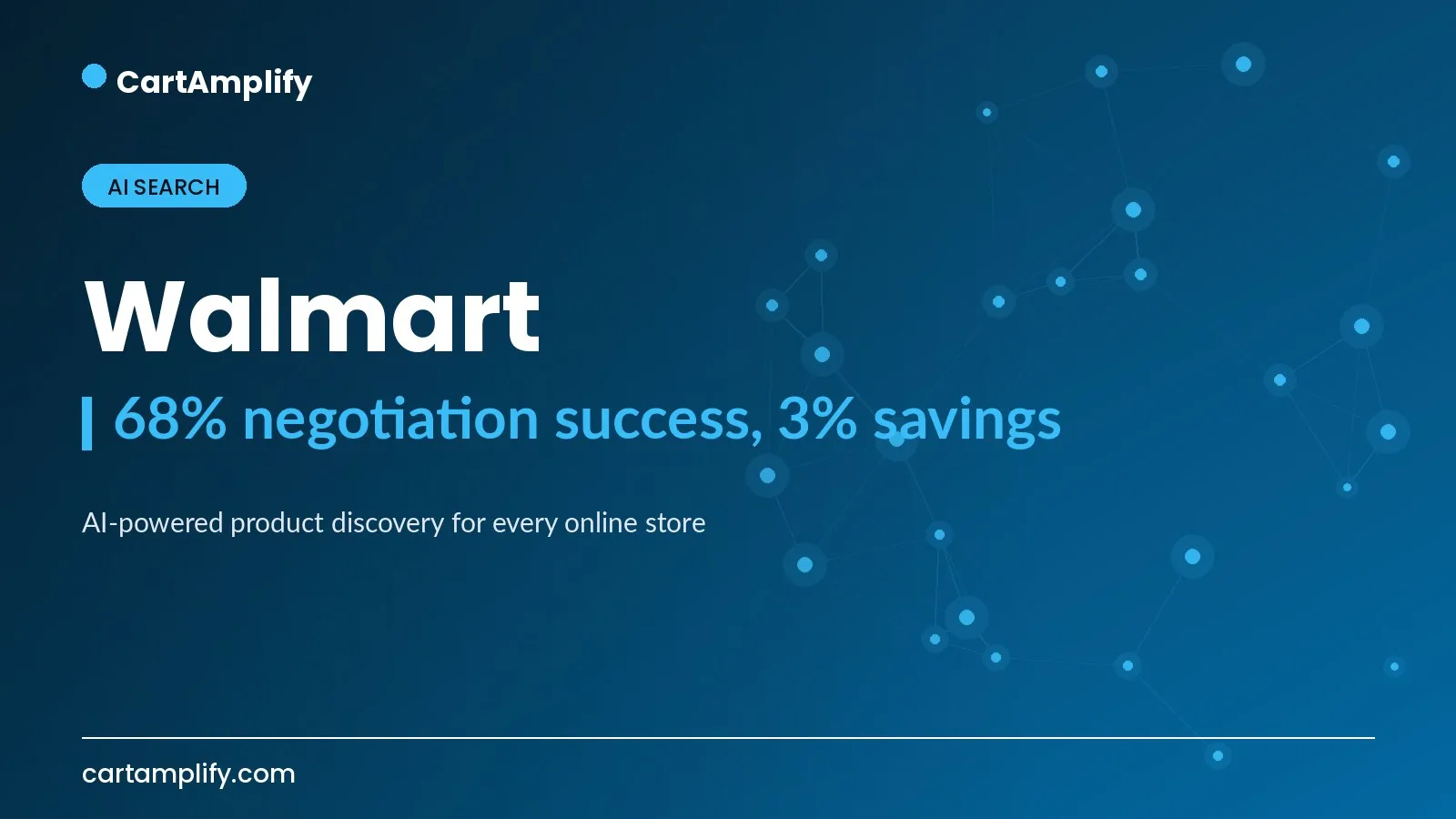
The result: Walmart uses AI to automate supplier negotiations with a 68% success rate and 3% average cost savings, while reducing stockouts through demand forecasting — the upstream work that makes its search results buyable and well-priced.
Search is only as good as what’s behind it#
A flawless search experience is worthless if it surfaces out-of-stock or overpriced products. Walmart’s edge is that AI runs upstream of search too: AI-automated supplier negotiations secure better prices (68% success, ~3% savings), and demand forecasting keeps the right products in stock. By the time a shopper searches, the products surfaced are available, competitively priced, and relevant — because AI prepared the ground.
This is the often-missed half of “AI in ecommerce”: the storefront gets attention, but the supply and pricing AI behind it determine whether discovery converts.
How AI search works#
AI search interprets intent and ranks results by relevance and likelihood to convert, personalized to each shopper. At Walmart, it’s the customer-facing end of a chain that includes forecasting and procurement.
Three mechanics matter. Personalized search surfaces the products each shopper is most likely to want. Availability-aware relevance keeps results in stock, thanks to demand forecasting. And competitive pricing — enabled by AI negotiation — makes those results compelling, not just relevant.
Why the full stack matters#
The lesson is that conversion depends on more than the algorithm a shopper sees. A relevant search result that’s out of stock frustrates; a relevant result that’s overpriced loses to a competitor. Walmart’s AI ensures the products its search surfaces are available and well-priced, so relevance translates into purchases. The whole chain — negotiation, forecasting, search — working together is what makes discovery pay off.
What this means for your store#
You don’t operate Walmart’s supply chain, but the integrated mindset helps:
- Connect search relevance to real availability so results are buyable, not just relevant.
- Use demand signals to keep the right products in stock for the searches you expect.
- Remember that price and availability shape conversion as much as the search algorithm.
Search is the last step of a chain. The stores that win make sure what search surfaces is in stock and priced to sell.
Bring AI search to your store with CartAmplify#
CartAmplify brings personalized, availability-aware AI search to any store — Shopify, dropshipping, or marketplace. Search that surfaces the right, in-stock products and turns discovery into sales.
Related reading#
- How Walmart Uses AI Across Search and Forecasting
- How Walmart’s AI Browsing Grew Ecommerce to 18%
- How Crate & Barrel Lifted Conversion 44% with AI Search
Figures cited from publicly reported Walmart AI initiatives (including AI-assisted supplier negotiation). Results vary by catalog, traffic, and implementation.