
Why is natural-language search transformative for secondhand and unique-item stores? Because shoppers describe what they want in human terms — “Fourth of July outfit,” “Brat summer vibe” — that keyword search can’t handle. ThredUp’s AI search understood those queries, and shoppers started discovering far more.
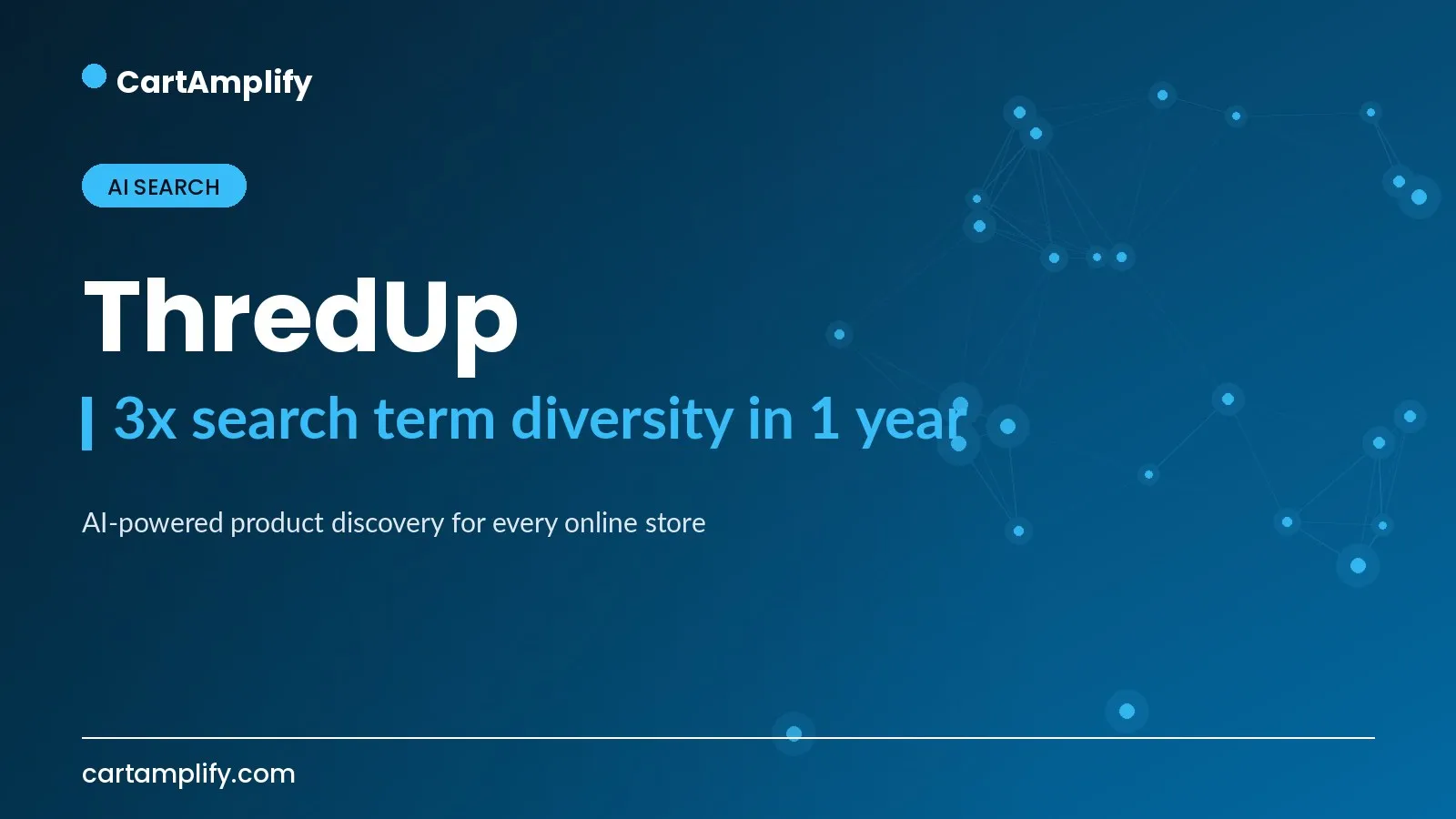
The result: ThredUp’s AI-powered natural-language search reportedly tripled the diversity of search terms shoppers used within a year — a sign that customers were discovering significantly more of the catalog, with far fewer dead-end “zero results” pages.
When search understands how people talk#
ThredUp’s CEO put it plainly: before AI search, a query like “Fourth of July outfits” returned zero results, because no listing used those exact words. Keyword search demands that shoppers guess the catalog’s vocabulary. ThredUp’s semantic, natural-language search flipped that — understanding descriptive phrases, pop-culture references, and trends like “Brat summer,” and matching them to relevant items. The result: shoppers searched in their own words, hit far fewer dead ends, and explored a wider range of the catalog, tripling search-term diversity.
How AI search works#
AI search interprets meaning rather than matching strings. It understands natural language, descriptions, and references, then ranks results by relevance.
Three mechanics drive ThredUp’s result. Semantic understanding maps descriptive and trend-based queries to relevant products, even without keyword matches. Dead-end elimination turns former “zero results” pages into useful results, so no query fails. And continuous learning sharpens matching as shoppers explore new kinds of queries.
Why fewer dead ends means more discovery#
The tripling of search-term diversity is a telling signal: when search stops failing, shoppers get bolder. Each successful, creative query that returns good results encourages the next, so shoppers explore the catalog in ways they never could with rigid keyword search. Eliminating dead ends doesn’t just recover lost queries — it expands the range of how shoppers shop, surfacing more of the catalog and creating discovery that wouldn’t have happened. For a unique-inventory store, that broader discovery is exactly where growth comes from.
What this means for your store#
Any store with natural-language queries — especially varied or unique inventory — can apply this:
- Use semantic search so descriptive, trend-based, and natural queries return relevant results.
- Eliminate zero-result dead ends, which quietly shut down shopper exploration.
- Let shoppers search in their own words, and they’ll discover more of your catalog.
When search understands how people talk, shoppers explore more — and discover more to buy.
Bring AI search to your store with CartAmplify#
CartAmplify brings natural-language, semantic AI search to any store — Shopify, dropshipping, or marketplace. Search that understands how shoppers actually talk, the way ThredUp broadened discovery.
Related reading#
- How Target Plus Grew GMV ~50% with AI Search
- How Shopee’s AI Search Powers Discovery at $100B GMV
- How Wildberries Grew Turnover 60% with AI Search
The 3x search-term-diversity figure is as reported; ThredUp’s semantic search and dead-end reduction are publicly documented. Results vary by catalog, traffic, and implementation.